
Income Protection Australia :: News
SHARE

Share this news item!

Disaster Recovery Gap Puts Retail Resilience in Focus

New QBE-commissioned research shows severe weather can affect small business numbers well beyond the clean-up phase

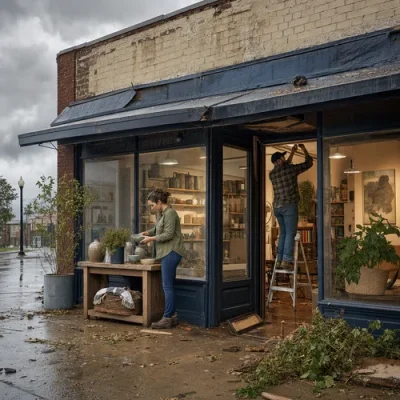
Disaster Recovery Gap Puts Retail Resilience in Focus?w=400

The information on this website is general in nature and does not take into account your objectives, financial situation, or needs. Consider seeking personal advice from a licensed adviser before acting on any information.

Fresh research commissioned by QBE and conducted by Oxford Economics Australia has put a longer lens on disaster recovery for small businesses, finding that the economic effect of floods, bushfires and cyclones can deepen well after the initial clean-up.
For Australian retailers, the message is practical: recovery planning and insurance settings need to reflect more than the first few weeks after a major event.

The report, released in October 2026, examined seven significant Australian disasters between 2018 and 2023 and compared affected communities with similar areas that were not hit by a major disruption. It estimated that affected regions had around 3% fewer small and medium enterprises than expected in the year of an event, widening to 4% after one year and 9% after two years. By the third year, the gap was still around 7%.

Those figures do not mean every missing business was directly destroyed by weather. QBE’s own commentary notes that disaster can slow new business formation, reduce investment and exhaust the reserves that allow firms to keep trading in the immediate aftermath. Even so, the pattern is important for shop owners because retail recovery often depends on factors outside the shop itself: customer foot traffic, staff availability, freight routes, nearby anchor tenants and whether the broader shopping precinct comes back to life.

This is where insurance design and business continuity planning meet. Property cover may help with damaged fit-out, stock or equipment, depending on the policy. Business interruption cover, where held, raises a different question: how long would revenue realistically take to recover after a major loss? A short indemnity period may look affordable at renewal, but it can be tested if rebuilding approvals, replacement stock, supplier delays or a damaged local economy stretch recovery over many months.

Retailers reviewing common retail disasters should also look beyond the headline insured event. Useful checks include current stock values, seasonal peaks, replacement cost assumptions, lease obligations, flood or storm exclusions, waiting periods, sub-limits and whether temporary trading costs would be recognised. Educational tools can help businesses estimate replacement values, but final cover decisions still depend on policy wording, insurer appetite and the individual business circumstances.

The report is also a reminder of uncertainty. It was commissioned by an insurer and analyses community-level outcomes, not individual claim results. However, its broader point is difficult to ignore: a disaster recovery plan that ends when the doors reopen may be too narrow. For shop owners in exposed locations, resilience is increasingly about surviving the second year as well as the first week.

Published:Thursday, 5th Nov 2026
Author: Paige Estritori

Please Note: We do not endorse any specific products or companies. Some content is sourced from third parties, including press releases, and may not be independently verified for accuracy or completeness.

Share this news item:

Rate this article

0 Comments

No comments yet. Be the first to share your thoughts.

Insurance News

Credit Card Travel Insurance Cuts Create a New Pre-Trip Check
11 Nov 2026: Paige Estritori
Australian travellers who have long relied on credit card travel insurance now have a fresh reason to check their cover before leaving home, with several major banks reducing, restructuring or removing complimentary travel insurance benefits across selected cards. The changes do not mean every cardholder is uninsured, but they do mean past experience is a poor guide to what applies to the next trip. - read more
New WHS figures sharpen the risk picture for tradies
11 Nov 2026: Paige Estritori
Safe Work Australia’s latest Key Work Health and Safety Statistics, released on 12 October 2026, provide a fresh reminder that construction remains one of the country’s highest-risk work environments. The national data records 41 construction worker fatalities in 2025 and shows construction accounted for 11.7% of serious workers’ compensation claims in 2024-25, making the figures directly relevant to trade businesses reviewing safety systems, contracts and insurance arrangements. - read more
Mallee Hail Is a Sharp Reminder About Harvest-Time Insurance Gaps
10 Nov 2026: Paige Estritori
A damaging hailstorm across Victoria’s Mallee has turned a promising harvest into a difficult insurance and cash-flow test for affected grain growers. ABC Rural reported on 6 November 2026 that hail swept through districts including Birchip, Wycheproof and Quambatook, damaging thousands of hectares of wheat, barley, lentils, canola and other crops just as many paddocks were ready to harvest. - read more
Strata Storm Claim Ruling Puts Defect Exclusions in Focus
10 Nov 2026: Paige Estritori
A recent Australian Financial Complaints Authority decision has highlighted a difficult but common issue for strata communities: damage that happens during a storm is not always insured storm damage. The dispute, reported on 5 November 2026, involved an owners corporation claim for a collapsed parapet wall, with the insurer declining cover on the basis that defective design, materials or workmanship were the dominant cause rather than the weather event itself. - read more


Income Protection Articles

How Income Protection Underwriting and Health Disclosure Work in Australia
Income protection underwriting is the assessment insurers use to decide whether cover can be offered, on what terms and at what premium. This guide explains the health, occupation, income and lifestyle information Australian insurers may consider, and why accurate disclosure matters. - read more
Financial Safety Nets: Why Income Protection Should Be a Priority
Unexpected sickness can disrupt your life in many ways, especially when it comes to your financial stability. The loss of income during illness can create a financial burden, making it tough to manage daily expenses and bills. - read more

Does Income Protection Insurance Cover Redundancy or Job Loss?
Income protection insurance is generally designed to help replace part of your income if illness or injury leaves you unable to work. It usually does not cover redundancy, ordinary job loss, business downturn or reduced hours for non-medical reasons, although some policies may respond if illness or injury reduces your work capacity. - read more
How Income Protection Insurance Can Safeguard Your Financial Future
Income Protection Insurance is a type of insurance policy designed to provide you with a substitute income if you are unable to work due to illness or injury. This form of insurance essentially acts as a financial safety net, ensuring that you can continue to manage your living expenses even when your regular earnings have been disrupted. - read more

Knowledgebase
Whole Life Insurance:
A type of life insurance that provides coverage for the insured's entire lifetime, with a savings component that builds cash value.